2020
Project Context Master’s Course: Designing Interactive Experiences
Roles User Interaction Design, Unity Development, Video Editing
Challenge The first lockdown of the COVID-19 pandemic caused many to yearn for intimate contact with the loved ones they were separated from. The focus of our team of six students was on an interactive experience that could be enjoyed from home without gathering physically.
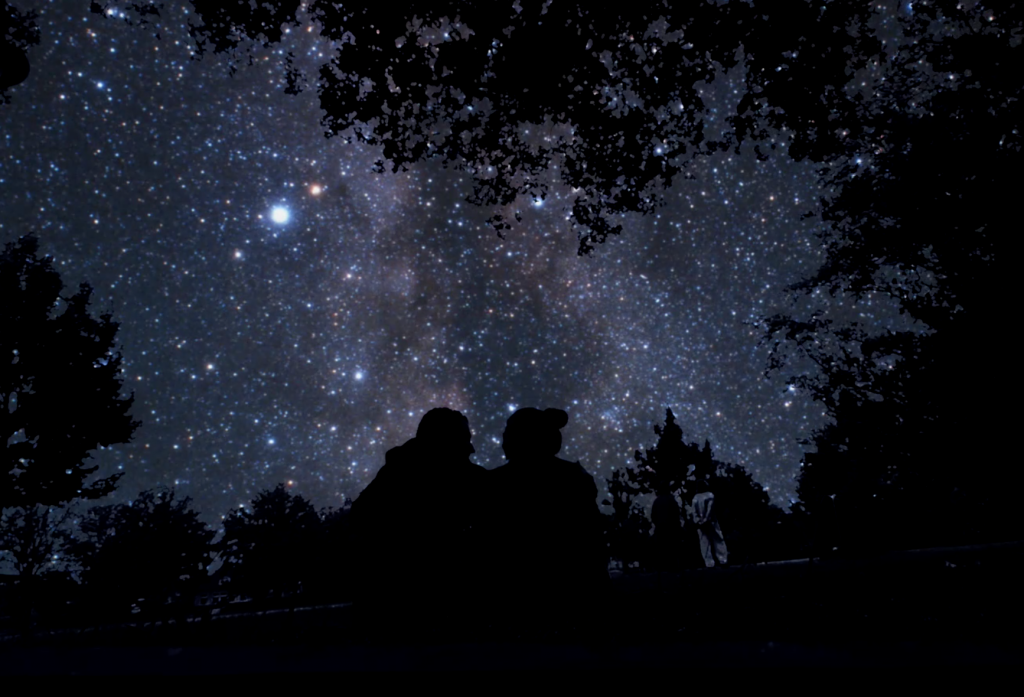
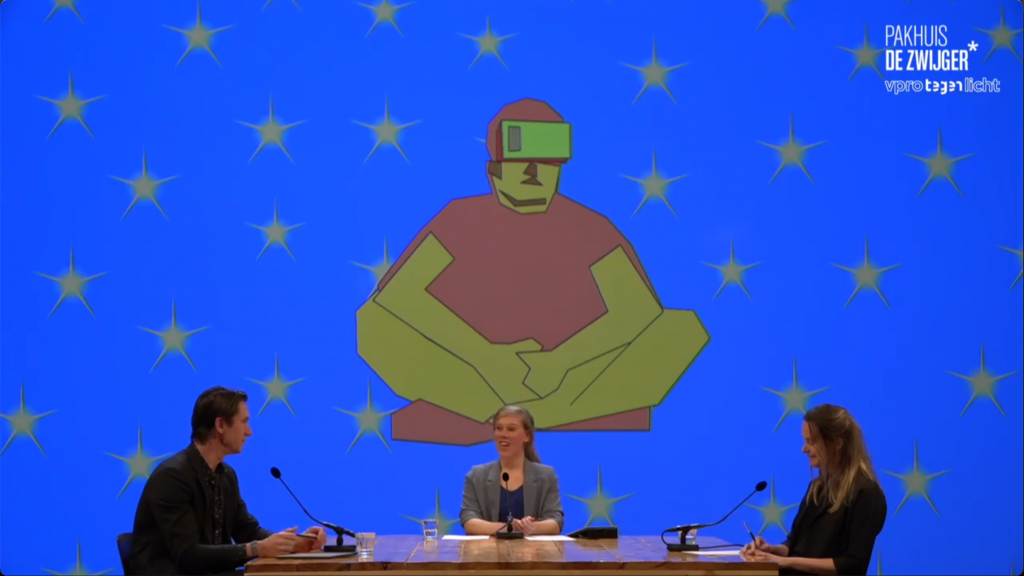
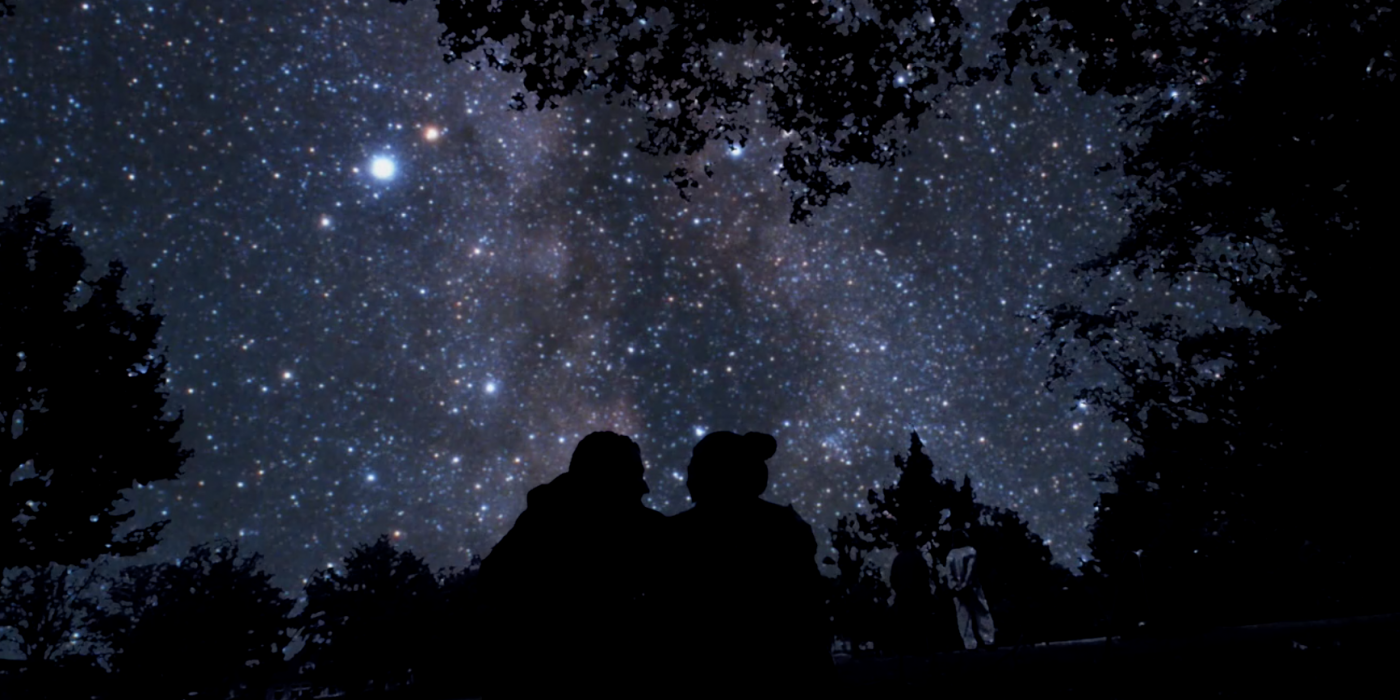
Result We developed a VR stargazing Android app for people that want to share some intimate time with loved ones they are separated from. Our project was a finalist for the title of ‘VPRO Tegenlicht 2020 Pioneer’ (Dutch) and was featured in 2021 by VPRO Tegenlicht in a documentary (Dutch).
Tools Unity, Miro, Final Cut Pro

Background
During the height of the coronavirus pandemic, we had to keep distance from our loved ones. Fortunately, we could still talk to the people that we love and share time with them while being apart, but there were some elements missing. You do not feel like you are actually close to the other as it is still clear you are in separate rooms. There is no immersion into the shared experience with a regular video call. Thus, making it hard to have real intimacy in such a limited digital space. Especially in Covid times, people could use some mental comfort in those trying times. So, the question we asked for our experience was: “How can we create the feeling of intimacy in a shared experience, while both participants are not in the same physical environment?”
In a team of six students, we tackled this challenge remotely. Our task was to design and create an interactive experience. As part of our Master’s course, we applied the principle of “research through design”, using the design process’s methods and practices as a research method. Beyond creating a tangible product, this process also served as a way to gain knowledge about virtual intimacy.
Ideation
As the Covid pandemic was still in its early stages, our entire design process was conducted remotely. This included the usual brainstorming session with post-it notes, but instead of using physical notes, we utilised the online collaborative platform Miro to gather our ideas. Ultimately, we concluded that stargazing had the potential to intimately connect two people living apart through a shared experience.

To get a feel for how we could shape this experience, we conducted bodystorming sessions in couples. Each of us went out separately to look at the stars, while we remained connected through a phone call.
We realised that the essence of the experience is being connected through shared activity. A voice connection, music, and a starry sky were all important features that helped mediate the mood. We chose VR because it’s a great tool that allows for a remote experience that still feels very embodied and immersive.
Getting Preliminary Feedback
Testing our initial ideas was complicated by the inability to meet in person. Consequently, we focused on testing experience setups that could be easily set up at home with minimal preparation. For instance, we created a rudimentary version of the stargazing experience, complete with a dark space, lamp, and paper with holes. We conducted a video call with peers and course instructors to test it out. We instructed the participants on what to do, observed their actions, and asked follow-up questions afterwards.
From this experience, we confirmed the potential of stargazing as an intimate activity. However, we also discovered that using voice instructions took users out of the experience. Additionally, simply hearing the voice of the other participant in the session wasn’t enough to create a sense of being in the same room. Other feedback prompted us to consider including different modes in the application, such as a game mode, to enhance engagement for returning users.
Finalizing the Experience
We placed a strong emphasis on enhancing the feeling of co-presence, the feeling of being in the same space. Drawing on user feedback and research, we introduced several features aimed at improving this aspect.
Firstly, we incorporated an avatar to provide a virtual representation of the other user. We kept it simple to maintain focus on the stars and ensure the implementation was feasible within our limited timeframe.
Since this is a shared experience, users might wonder what the other is observing or want to point out a specific area of stars. To address this, we added a gaze-based pointer. When activated, a visual pointer would appear, precisely following the user’s gaze.
Lastly, we included shared goal-oriented activities. For instance, we introduced a simple game where users had to identify star constellations. Additionally, we created a mode that prompted users to ask each other intimate questions. These additional modes not only fostered a stronger sense of connection but also increased the overall engagement of the experience.
Developing a Prototype
Our final result had to be a fully functional, interactive experience. To achieve this, we used Unity, a 3D engine, to develop a prototype for Android phones. The idea was to allow users to purchase a relatively inexpensive VR case for their phones and use our software without needing to physically provide them with the hardware.
I was specifically tasked with creating the remote connection between users. In Unity, I programmed the system that facilitates this remote connection. Additionally, I designed and implemented the pointer.

Initially, we intended to include a physical component to our experience. We envisioned users projecting stars onto their ceilings and tracing constellations with their phones before transitioning into VR. However, through testing, we discovered that the technical aspects of this feature were challenging to perfect and did not significantly enhance the overall experience. Consequently, we opted for a simpler transition to VR. After setting up the app, users were instructed to lie down as the final step to activate the VR experience. The camera view displayed to the user then transitioned to VR.
Final Demo
Before presenting our final product, we conducted one last pilot test with another project team. This helped us identify any problematic bugs, allowing us to create a stable version of our experience for the final demo.
In our final demo, invited outsiders finally had the chance to experience the full product. Apart from the great enthusiasm, we also received valuable feedback. For example, one user suggested personalisation options for the avatar, while another proposed that the pointers interact with each other. Overall, the users enjoyed the general experience and the added level of engagement that the questions provided to their conversations.
“When I realized the little star is the other person and we were dancing around each other. That was absolutely marvellous!”
– Demo Participant
As part of the project deliverables, I also edited a video to present and promote our developed product:
Future Improvements
Our project time was limited, but our ideas weren’t. As a result, we created a list of additions that could be incorporated in the future.
- Personalize music:
- Allowing users to choose background music.
- Leave personal notes:
- Users could also leave personal notes in specific locations (at specific stars) for their partner to find later. These notes would expire after several days, encouraging regular app use.
- Add a physical object:
- Coupling to the app physical products that give haptic feedback, such as a hug pillow, could enhance the multi-sensory experience.
Impact
After the project, we realised that our work had gained interest beyond the university. This led us to join the ‘Pioneer 2020’ competition on the Dutch TV show VPRO Tegenlicht. Alongside three other teams, we made it to the finals, where I represented our team as the spokesperson. In January 2021, our project was also featured in a documentary and accompanying article on VPRO Tegenlicht.

The topic of virtual intimacy was clearly very relevant during Covid times. However, even without mandated social distancing, we are living more and more online. That makes virtual intimacy a topic that is worth exploring with increasing importance.